


Everything you need to know about Warsaw before your trip, from currency to language, local festivals, time zones & safety of the water. Plus great ideas about what to see, do and eat while there!


A post hoc folk legend, (popularized in 16c) attributes the name to a mythical fisherman Wars and his mermaid wife Sawa, (SEE LORE BELOW) who provided fish during a famine; but there is no evidence, or even hint, of who the actual eponymous Wars might have been.
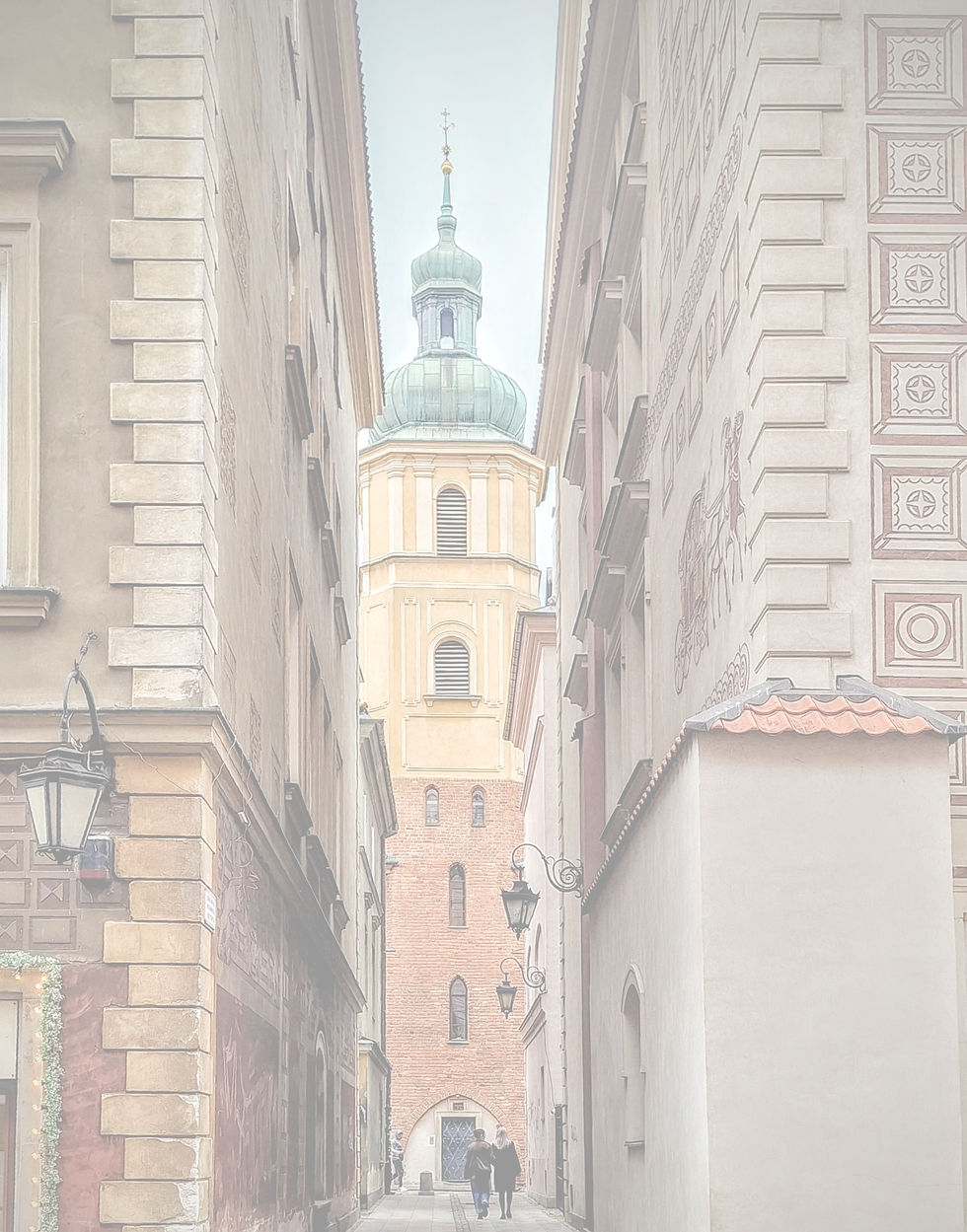

@ a glance essentials:

Language:
Polish
_

Polish Zloty


Water safety
Generally Safe to Drink, taste varies by region.
Many Locals can speak English
Currency:
PLN
Local Transport
Bus, Tram, Metro, SKM & Trains sufficient for the city.


Capital and largest city of Poland, Warsaw traces its origins back to a small fishing town known as Warszowa. Slavic🔍 tribes had settled on the elevated terraces of the Vistula River by the 9-10c AD but it wasn't until the late 13c that the city🔍 became fortified (as an outpost against the Teutonic Knights.)
In 1413 is was officially made capital of the Masovian Duchy, (a semi-autonomous territory fragmented from 🔎Kingdom of Poland.) Later, in the 16c when Poland & Lithuania unified, Warsaw became capital of the new Commonwealth🔍, due to its central location between the capitals of the two kingdoms; Kraków & Vilnius, and the royal court was transferred to the city in 1596.
a bit of background...
CHECK OUT THE:
MY FAVORITE SPOTS TO...
.................. About 90% of Warsaw was destroyed in WWII, so much of the modern city was built during Communist times. (As such, most of Old Town, despite being a UNESCO World Heritage site🔍, is not original, but was significantly, and meticulously, reconstructed.)
FUN FACT:
At the dissolution of the Polish-Lithuanian Commonwealth, Warsaw was annexed by the Kingdom of Prussia in the 3rd (final) partition of Poland, and became the capitol of the province of South Prussia.†
In 1807, after the Napoleonic Wars, the Duchy of Warsaw was created as a client state🔍 of France (consisting of some Polish lands previosly annexed by Prussia, Russia & Austria) with Warsaw, naturally, as it's capitol, but after Napoleon's defeat in 1815 the city was assigned to the newly created Congress Poland under the Russain Empire🔍.
The 19c brought multiple uprisings, more war, the Underground Polish National Government operating from Warsaw, and a demographic boom (due to the Industrial Revolution) which saw Warsaw become one of the largest, most densely populated cities in Europe.
The 20c was much the same, with WWI & Warsaw occupied by Germany, the Polish–Soviet War & Battle of Warsaw (where the Polish successfully defended the capital, and stopped the attempted spread of the Bolshevik Red Army into Poland,) only to be invaded and occupied by Germany again, kicking off WWII.
Sadly, the city suffered near-total devastation by the Nazi bombings; approximately 85% of its buildings were destroyed, including much of the historic old city, and more devastating the population was decimated in the Ghetto Uprising, the Warsaw Uprising and systematic razings. After the war Warsaw's was rebuilt with Old Town meticulously restored and later designation as a UNESCO World Heritage Site🔍
† This was at the time of the French Revolution and Louis XVIII spent his exile in Warsaw, under the pseudonym Comte de Lille.
Must Try Local Cuisine:
Pyzy - large potato dumplings w/ minced meat, + fried onions, bacon bits, or pork scratchings, often served in glass jars
Kielbasas (sausages) like thin, dry Kabanosy & white Biała ∞ Pierogi - half-moon shaped dumplings
Zapiekanka - baguette; Polish Pizza🍕 ∞ Flaki po Warszawsku - Warsaw tripe soup ∞ Żurek -sour rye soup
Gołąbki ('little pigions') - pork / beef, onions, rice & mushrooms baked or fried in cabbage leaves w/ spicy tomato sauce.
Zrazy - rolled, fried & braised beef, veal or game meat stuffed w/ breadcrumbs, mushrooms & cucumber
Kotlet Schabowy - breaded pork cutlet ∞ Kopytka - mashed potato dumplings ∞ Mizeria - cucumber salad
Śledzie po Kaszubsku† - pickled herring w/ sour cream, onions, apples & egg ∞ Bigos (Hunter’s Stew)- w/ sauerkraut
Pączki - deep-fried doughnuts ∞ Ptasie mleczko - chocolate-covered marshmallow candy originating in Warsaw
Szarlotka - cinnamon pastry ∞ Seinų, Miód- honey from a polyfloral nectar in a specific Polish/ Lithuanian District
Sękacz - tree cake [a thick batter repeatedly poured over a rotating horizontal spit creating the shape of a tree] a softer, more delicate version than it's German/ Belerussian cousins
Wuzetka (aka W-Z cake)†† - chocolate, cream & cherry jam cake ∞ Hamantaschen - traditional Jewish,▽ pastry
➿➰➿
† Dating to the 13th century †† A Warsaw invention ~ late 1940s, named after the W-Z (East-West) route built after WWII.

SEE
DO TRY
&
VISIT
What to Where to Why . . .
Surprising Finds:


📍 Warsaw Fotoplastikon 📸 - 20th century 3-D picture show. Based on Victorian home stereoscopic viewers the
fotoplastikon was Poland's first 3-D theater, a kind of scaled up view-master were viewers sit around a large
cylinder looking through eyepieces, while stereoscopic slides scroll and music plays in the background.
📍 Converted Public Works like the fantastically preserved Wola Gas Company/ Warsaw Gasworks Museum, the
Elektrownia; a former power station converted into a trendy shopping spot & food hall still decorated with
quirky, high-quality cocktails in a beautifully restored historic vodka factory
📍 Galeria Forty / Forty - outdoor art gallery in an abandoned Warsaw fort, Fort Bema, celebrating street art
📍 The tallest building in the EU; modern, sleek Varso Tower @ 310m plus Keret House; world’s narrowest house, 30 ft
tall but only 28" wide at its narrowest point, and just 4 feet at its widest. A total of 46 sq feet of floor space
manages to fit a bedroom, a bathroom, a kitchen, and a two-beverage refrigerator in the span of three floors.†
† Legally classified as an “art installation” because it doesn’t meet housing codes, but, in practice, it still serves as a residence nonetheless. It was constructed as a memorial to the designers family killed in the Holocaust, and named after Etgar Keret, the Israeli filmmaker and author who was the house's first tenant, after living there for a number of weeks, the Keret House became open to traveling writers for the night's stay and is open to all visitors to Warsaw.
My Favorite Spots . . .

📍 Old Town with Warsaw Mermaid 🧜♀️ Statue in the cobblestoned Market Square, Sigismund's Column in Castle Square
and lover's Wishing 🔔 Bell†
[Gnojna Góra/ Dung Hill Lookout Point offers scenic views of Old Town atop a centuries-old former dump.]
Plus neighboring New Town (only 'new' in comparison to Old Town) with Baroque St. Kazimierz Church c.1688...
(🆓, but you may need to make an appointment to visit)
...Neoclassical Raczynski Palace, Rococo Sapieha Palace, and Freta Street from The Barbican (a rebuilt section of the city’s
medieval fortifications) to the new Market Square.
📍 Praga-Północ district - on the Vistula banks; the grittier, artistic side of Warsaw. Known for Ząbkowska Street; one of
oldest streets in Warsaw, famous for historical tenement houses (built at the turn of the 20c). cool nightlife, pre-war
architecture, art galleries & street art, plus the beach
📍 Powiśle - trendy riverside area with nice cafés, street food, and a relaxed local feel.
📍 Saska Kępa - leafy, upscale residential district with great restaurants & beautiful pre-war architecture. and other
forested neighborhoods, like Wawer or Kabaty with small local beaches, streets lined with old
wooden houses and shrines & wild boar roaming the districts
† According to legend, a young bellmaking apprentice was in love with the daughter of a bellmaker & they wished to mary, but
another apprentice also wished to mary her & take over her father’s business. He laced the first apprentice's wine with arsenic &
added tin into the bronze the bellmaker was using for an important commision. so that the moment the completed bell was rung
it would break. The first apprentice died & the bell did break, but the bellmaker kept his job & the daughter was so heartbroken
from the death of her love she joined a convent. So the man got niether the girl nor the business & eventually went insane &
committed suicide. The broken bell was placed on the square, never to ring again. It’s said that any prayer said there will go
straight to heaven, and that the ghosts of both apprentices visit the bell at midnight on the last night of October.
... to Wander & Explore:

... to Visit:
* Historic Churches🔍 like:
📍 Holy Cross Church 📸 - most visited church in Warsaw, originally built 17c, with two high towers, and a
sculpture of Christ & Cross in front, plus a restored Baroque interior where Chopin's 🫀 Heart 📸
was laid to rest.†
📍 Archcathedral Basilica of Saint John the Baptist 📸 - Gothic stepped gable brick with medieval interior dating
back to the 14c, (oldest church in Warsaw); with monuments to Polish figures & Mieszko the Stone 🐻 Bear
(SEE ADVENTURE BELOW)
📍 St. Anne’s Church - one of Warsaw’s oldest buildings. c.1454 with a Neo-Classical facade c 1780s and
High-Baroque interior with hand-painted frescoes 📸 & (massive) Mammoth 🦴 Bone on display
📍 Church of the Visitation of Blessed Virgin Mary - Gothic c. 1411 - one of the oldest churches in Warsaw
📍 Gothic & Baroque 17c, classics like St. Francis Church or St. Jacek’s Church & adjacent Jesuit, Dominican
monastery (i.e St. Hyacinth's Church, after Saint Hyacinth of Poland) & Saint Martin's 📸 with baroque façade on
a much less orate church dating to the 15c.
📍 Saint Dominic’s Church - modern brick, known for unique interior with "I" beam like support arches
* Some Churches do charge for acesss to bell towers e.g.







📍 Czar PRL: Museum of Life Under Communism - with replica apartment building & a collection of everyday
objects spread throughout the top floor of an old office building in the city center.
📍 Gestapo Headquarters Museum + Mausoleum of Struggle & Martyrdom 📸 - focused on the conflict between the
the Polish resistance and the Gestapo with old detention cells used to hold and torture prisoners.
📍 Gallery of Medieval Art - one of the world's largest collections of medieval religious art.
📍 Copernicus Science Center - dedicated to the famous Polish astronomer and polymath; 450+ interactive exhibits
plus a planetarium make it one of the most modern science centers in Europe (There is also a
Nicolaus Copernicus Monument outside the Academy of Science Building)
📍 Marie Skłodowska-Curie Museum - biographical museum of the Nobel Prize winner housed in the 18c tenement
house her mother ran as a boarding house for girls and where Marie was born. (There's also a
Marie Skłodowska-Curie Monument, Walking Tours based on her life, and a Tree, planted by Marie
herself that's now treasured by the Radium institute that she set up.)
📍 The Museum of Dollhouses, Games & Toys - dedicated to the tiny homes of dolls etc.
📍 National Museum in Warsaw - with The Battle of Grunwald; an enormous 32-foot painting of Poland's greatest
medieval battle against the Teutonic Knights of the Holy Crusades
† Chopin died in Paris, but his sister snuck his heart out of the country to honor his wish that it be buried in their native country, hiding it in a jar of booze (probably cognac). During WWII the Nazis, stole it (as well as outlawing playing his music). however, after the war, the Germans thankfully gave it back.
... to Commune w/ 🌳 Nature:
📍 Royal Łazienki Park - one of the largest parks in Europe, with lakes, a small classical palace
on an island, several pavilions, an amphitheater & roaming band of peacocks,
📍 Park Akcji Burza | Mokotów - featuring a huge mound with a Kotwica, (anchor ⚓ monument,
symbol seen around Warsaw, representing the Home Army resistance group that fought
the Nazis during WWII)
📍 Powazki Cemetery - c1790 city’s oldest cemetery, with cool sculptures & where the family of
Frederic Chopin is buried (Chopin himself is buried in Paris,
SEE Holy Cross Church in VISIT ABOVE)
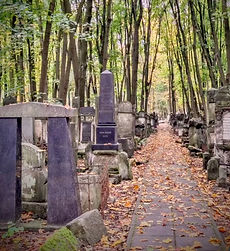
📍 Okopowa St Jewish Cemetery 📸 - one of the largest cemeteries in Europe. with more than 200,000 graves
📍 Kampinos National Park - great for hiking, biking, and exploring dunes & forests OR
Zegrze Lake - for wakeboarding, sailing, jet-skiing, and beach activities (both ~30–45 min outside the city)

... when feeling 📚 Bookish:
📍 Warsaw University Library - stunning modern architecture with elaborate Rooftop Gardens 📸
📍 Jewish Historical Institute Library - in the former Main Library of the Great Synagogue. Important collection
related to Polish-Jewish history, including rare documents from the Warsaw Ghetto
📍 Warsaw Public Library - historic main public library (c.1907)
📍 Metroteka | Kondratowicza Metro Station - Poland’s 1st underground metro station library; unique, futuristic,
space with over 16,000 books
📍 Antykwariat Grochowski - antiquarian bookstore; huge, atmospheric space packed with rare, old & used books.
📍 Antykwariat Warszawa - selection of pre-war books, scientific works, posters, old photographs, & bibliophile items
📍 Księgarnia Artystyczna Bookoff (Museum of Modern Art) - design, architecture, photography & rare international
📍 Wrzenie Świata - independent bookstore hidden in a courtyard
📍 The Gentle Barbarian - charming 2nd hand bookstore & café
... when feeling Adverturous:
📍 Kayaking, SUP paddleboarding & speedboat tours or traditional galar (raft) cruises on the Vistula River
📍 Light shows & waterworks @ Multimedia Fountain Park - two large fountains that spray choreographed pattern to
music. (anything rom Chopin to Lady Gaga.) & kids can play in a water playground (Fri & Sat nights in the summer)
📍 Go on a Chopin Tour - in addition to the Fryderyk Chopin Museum 📸 and Chopin Monument hosting
summer concerts, Warsaw has Chopin Benches designed like piano's 🎹 that play Chopin's music, scattered
in locations connected to Chopin's life in the city.†
📍 Go on a Bemisie (Tiny Bear) Hunt - a large Stone 🐻 Bear statue 'sleeps' in plain site 📸 @ the Archcathedral Basilica of
Saint John the Baptist (SEE VISIT ABOVE) but tiny bronze scultures of bears, also inspired by the myth of the heart-
broken Prince Mieszko are hidden around the Bemowo district too.††
(misie is a Polish word of endearment implying "cute/ little.")
📍 Scuba Dive @ Deepspot | Mszczonów (a few hours outside the city) - one of Europe’s deepest diving pools for scuba diving
† When I was there the benches I visited where unfortunetly not working :🤔 I don't know if it was a temporary issue or if they are not being maintained...
†† In the legend Prince Mieszko (or Gniewko), was an orphan found in a bear's den by the King during a hunting trip. The boy protected the bear and her cubs in the den from being shot by putting himself between them the Kings hunters, and impressed by his bravery the King adopted him. Still ferrell he was bad with people, especially women, until he did manage to fall in love and get engaged. Unfortunately Mieszko was summoned into service abroad and when he returned he found his love being forced to marrying someone else against her will. So heartbroken he nearly died, he was saved by a witch who turned him into a stone bear, and is destined to remain that way until his true love kisses the statue.
📍 Bristol Café - luxurious old-world charm, Art Deco coffee shop c. early 1900's, with classic pastries
📍 Café Patio - beautiful historic courtyard w/ glass roof 📍 Relaks (Relax) - specialty coffee & cool retro posters
📍 Pożegnanie z Afryką (Out of Africa) - cozy café w/ a focus on high-quality coffee beans and a warm, intimate vibe
📍 Fat White - attached to a hip barber shop, known for coldbrew & a collection of toy action figures
📍 Filtry - an original specialty coffee café, cozy & retro 📍 Forum - dog friendly w/ changing menu of specialty coffees
📍 Hałas - a garden area, a 'store' selling collectors classic vinyl plus a Nordic-style coffee lounge
📍 Vintage Kolektyw - also a vintage furniture shop, drinks include non-alcoholic wines, kombuchas, homemade
lemonades, alternative colas and a strong range of specialty coffee.
📍 Zaremba - doubling as a cocktail bar at night in a former bespoke tailor’s shop; plush blue velvets & gold surfaces
📍 Podwale Bar & Books - old-world glamour; dark wood, thousands of books, leather armchairs, cigar-friendly
📍 The Roots Cocktail Bar & More - intimate historic bldg w/ pre-Prohibition & golden-era cocktail techniques
📍 Pijana Wiśnia (Drunken Cherry) - small, quirky institution(s) specializing in cherry liqueur (wiśniówka)
📍 Same Krafty - atmospheric cellar bar in a historic building with great craft beer selection.
📍 Weles Bar - Slavic myth-themed speakeasy; hidden entry 📍 Column Bar - elegant, Art Deco, in historic Hotel Bristol
📍 Kraken Rum Bar - dive-bar specializing in Polish rum with seafood pairings.
... when I'm Peckish:
📍 Oberża Pod Czerwonym Wieprzem (The Inn Under the Red 🐷 Hog) - communist-themed w/ infamous dictators'
portraits & Eastern Bloc dishes like Wild Boar a la Tito” (a nod to Josip Broz Tito) & Proletariat’s Cutlet.
Where communists met to discuss revolution; allegedly frequently visited by Lenin when he was still known just
as Vladimir Ilyich Ulyanov, (named “Red Hog” as a throwback to pork being so popular w/ these communists.)
📍 Milk bars - traditional cost effective cafeterias from the communist era, like:
Bar Prasowy - oldest milk bar in Warsaw (c. 1954); a strong nostalgic communist-era atmosphere &
Bar Bambino; also a classic since the 1950s. OR
Bar Mleczny; Bar Mleczny Familijny w/ it's retro interior is good for first-timers, Bar Mleczny Rusałka is a
more authentic old-school PRL experience with classic décor & genuine homemade Polish food, while the
one @ Lindleya 14 is the highest-rated milk bar in Warsaw)
📍 Hala Koszyki - popular Art Nouveau food Hall c. 1906, with a variety of international cuisines OR Nocny Market /
Night Market (open April - Sep) - a vibrant event, with a wide variety of street food and live music performances
located in the city’s now-closed central train station.
📍 U Fukiera - oldest restaurant in Warsaw (c. early 16c) in a beautiful historic building with murals painted
by celebrity chef Magda Gessler. Classic Polish fine dining with elegant, theatrical interiors.
📍 Stary Dom ("Old House") - elegant, traditional Polish cuisine in a refined pre-war setting
📍 Romantyczna Restauracja - intimate, romantic atmosphere with seasonal Polish cuisine in historic cellars w/ a
lovely garden overlooking Old Town Square
📍 Restauracja Warszawska - refined traditional Polish dishes in an historic pre-war inspired interiors w/ open kitchen.
📍 Polka - colorful Polish restaurant in a historic tenement house with folk-inspired décor and classic Polish comfort food.
📍 Kamienne Schodki - atmospheric spot in the Old Town with great views and solid Polish classics.
📍 Epoka - modern take on historic Polish recipes using high-end techniques
📍 Pączki 🍩 (deep- fried, filled donuts) @ Street Stalls around the city.
📍 A. Blikle - historic café & bakery (c 1869), one of the oldest confectioneries in Poland. famous for exceptional
pączki (especially traditional rose jam filled), cakes, and elegant Viennese-style café atmosphere.
📍 Pijalnia Czekolady E. Wedel Café Chocolate Lounge / Staroswiecki Sklep - historic atmospheric old-world chocolate
café dating back to the 19c, with rich hot chocolate, pralines, and classic Polish desserts
📍 Cukiernia Pawłowicz - nostalgic old-school bakery known for excellent traditional cakes & pastries
📍 Pracownia Cukiernicza Zagoździński (c.1925) historic 4th-generation family business famous for traditional pączki
📍 LUKULLUS - charming old-fashioned spot with beautiful interiors and high-quality cakes and pastries
📍 Lody na Starowiślnej - popular ice cream shop known for high-quality flavors & natural ingredients
📍 Grycan - ice-cream chain known for classic treats like the "rurka" crispy, rolled dough wafer filled w/ sweet-cream
or custard or whipped cream.
📍 Słodki Słony - creative traditional Polish desserts like wuzetka; the classic Warsaw chocolate cake
... for something 🍨 Sweet:
Most Known For:


♦️ The Warsaw Uprising (with it's own Museum; Warsaw Rising 📸) - the 1944 fight for Polish
independence against German occupation that lasted 63 days & resulted in the razing of the
city (the largest resistance movement during WWII.)
~15,000 Polish, including hidden Jews, were killed, along with ~8,000 Nazi's.
🔸 Royal Castle & Medieval Ramparts -Gothic & Baroque fortress in Castle Square. Now a
museum, the first Tower was constructed in 14c it served as the royal residence & seat of
parliament of the Polish–Lithuanian Commonwealth from the 16c, later looted & partially
destroyed by Nazis under direct orders from Hitler.
Among it's treasures are 18c paintings of Warsaw The Canaletto Room, so detailed
they were used as reference to reconstruct the city after WWII, and the Warsaw 🐍 Basilisk†
statue at the legendary site of the monster's basement lair, where it turned all that look at it into stone.†
[Mythical basilisks can also be found all around the city, in murals, e.g. and the sign above the door of the eponymous🔍
restaurant. where the basilisk's eyes are lightbulbs that glow red at night]
Outside the ramparts is the Little Insurrectionist statue honoring children of the Polish Underground.††
♦️ Palace of Culture & Science - ornate skyscraper built by Stalin; a “gift” to the Polish people in the 1950s (making
it somewhat controversial today.) It is known for incredible views from the 30th floor observation deck (once the
tallest bldg in Poland @ 42 floors.) It offers a variety of attractions; a cinema, theater & Neon Museum 📸;
hundreds of Polish neon signs c. 1950s -70s.
🔸 The POLIN; The Museum of the History of Polish Jews 📸 on the site of the Warsaw Ghetto - largest of the Nazi
ghettos, est. 1940. At its height, as many as 460k Jews were imprisoned there, and over 90% of the Jewish
population in Poland was eventually killed.
Nearly all of th Ghetto destroyed in the Warsaw Uprising, but boundary markers and sections of wall at
Waliców Street remain (Historic Walking tours are also available) .along with tenement houses & the active
Nożyk Orthodox Synagogue, the only synagogue in Warsaw that survived WWII (used as a horse/ pig stable
by the Germans during the war)
'A Footbridge of Memory' memorial illuminates at night in a ghostly outline of a footbridge that once
connected two sections of the Warsaw Ghetto,
♦️ The Wilanów Palace - former royal palace built 1677 - 96 for the King of Poland/ Grand Duke of Lithuania,
surviving both Poland's partitions and the World Wars, it's one of the most remarkable examples of Baroque
architecture in the country (and is also now home to the Warsaw Poster Museum; national collection of
Communist-era musical posters, the world's oldest poster museum c.1968)
† The Basilisk was said to demolish buildings, steal livestock and amassing a great fortune (like a mix between a dragon & medusa) until a tailor, Jan Ślązak came to town. He only meant to stay for a short time but was wrongfully accused of murder, arrested and sentenced to death. A blacksmith who had lost his child to the basilisk and then suggested that the city ask Ślązak to kill the beast to spare his life if he succeeded. The tailor got a large mirror snuck into the basement and positioned the mirror so that when the Basilisk awoke it looked at its own reflection and was turned to stone.
†† Called Scouting, the Gray Ranks where children who were integral in the resistance, carrying messages for the troops, & sometimes even donning the stolen German helmets and guns and fighting on the front lines. The famous statue is modeled after an actual child soldier called “Antek,” a 13-year old who was killed in 1944.
📽️ NOTABLE FILMS SHOT IN WARSAW:
⭐ The Pianist | 2002 ⭐ The Zookeeper's Wife | 2017 ⭐ A Real Pain | 2024
⭐ The Night of the Generals | 1967 ⭐ Spies of Warsaw (BBC TV) | 2013
🍿
........................ In an 14c tale a Mermaid 🧜♀️, (Syrenka, in Polish) named Sawa swam up the Vistula† to Old Town, and teased the local fishermen, stirring up waves & freeing fish. Annoyed they set a trap and caught her, but Sawa began to sing and the fishermen fell in love & released her.
A greedy merchant, however, re-captured her & locked her in a cage to show her for money. The mermaid cried out & the fishermen heard & freed her again. Grateful, she vowed to always protect the city, becoming the Warsaw Mermaid. Many statues of Syrenka can be found, the most famous in the Old Town Market Square.
† There's a variation were Sawa married a fisherman 'War' & they gave their names to the city, (War + Sawa) Some versions say she has a twin - the Little Mermaid of Copenhagen; who swam from the Baltic Sea together; one to Denmark, the other to Warsaw.

🌀 Three Kings Parade / Orszak Trzech Króli (Jan. 6 / Epiphany) - one of the largest public events in Warsaw
spectacular street parade with biblical costumes, camels, horses, live music, & theatrical elements
🌀 Singer's Warsaw Jewish Culture Festival (Aug) - concerts, theater, exhibitions, workshops & tours (especially in
the former Jewish district) focused on Jewish history & culture
🌀 Krampus/ Perchten (end of December) - where the ominous half-goat, half-demon, Krampus 👹 (a creepy
companion of Santa Claus) roams the streets to punish misbehaving folk, while the well-behaved receive
treats from Santa (It is customary to offer the Krampus a schnapps to get on his good side)
🌀 Sztuka Ulicy (June) - open-air street theater, acrobatics, circus & visual performances +
Warsaw Theatre Meetings / International Theatre Festivals (May–June & September–October)
🌀 Science Picnic (May/June) - one of Europe’s largest outdoor science festivals
🌀 Warsaw Book 📚 Fair / Targi Książki (May) + Historical Book Fair – focused on history & non-fiction.
🌀 Royal Garden of Light / Królewski Ogród Światła (Nov – Feb) - illuminated gardens at Wilanów Palace &
artistic light installations.
🌀 Midsummer Night (Wianki (wreaths) nad or Wisłą) celebrations on the Vistula River - in addition to bonfires
young women make wreaths of wildflowers, herbs & ribbons, with lit candle in the middle & float them
on the rivers if it floats far & stays lit = good luck; a marriage, or bright future, if it sinks = bad omen.
Close Enough to Visit:
🪧 Poznań - known for it's Cathedral, (oldest in Poland) local specialty St. Martin's 🥐 Croissant & Renaissance Old Town 📸
🪧 Treblinka - with it's museum & seemingly never-ending stone memorial to those who died @ the Treblinka Nazi
labor & extermination camp, (~700,000 - 900,000 Jews were killed, making it 2nd deadliest after Auschwitz)
🪧 Toruń - with Nicolaus Copernicus House & Museum + the Gingerbread Museum, once a giant gingerbread factory, that
now hosts exhibits & workshops
🪧 Holy Mountain of Grabarka - a mountain covered in 𓂃+✝︎+𓂃 crosses of all shapes, sizes and colors; a huge yearly
Orthodox pilgrimage.
🪧 The Ostwall Fortification | Pniewo - once an underground Nazi city, now Europe's largest man-made 🦇 bat reserve
holding ~37,000 bats in winter. (Tourism is closed during the winter months)
🪧 Bydgoszcz - with The Exploseum; abandoned Nazi explosives plant founded by the inventor of dynamite, now an
underground museum + the Museum of Soap 🧼 & History of Dirt + the stunning Fara Church and it's secret
Polish Eagle that survived occupation during WWII, hidden in plain sight.
🪧 "Land of Open Shutters" | Hajnowski - three small villages in a valley of the Nawet River: Trześcianka, Sotse & Puchły,
full of old rustic cabin-like homes, mostly Orthodox Belarusians, known for their vibrant, colorful window shutters
🪧 Elbląg Canal | Jelonki - short sections of canal/water are separated by stretches of land requiring boats to be
transported by a series of railroad tracks to navigate the canal, built in the mid 1800's and hailed as one of
Europe's most impressive engineering wonders
🪧 World’s Tallest Pope statue | Czestochowa, - fiberglass Polish Pope John Paul II stands 13.8m (42 ft) tall
🪧 Zofiówka Sanatorium | Otwock - creepy abandoned Jewish sanatorium is tucked within the woods of Poland.
Going to visit
Make a DONATION of $5 or more and receive a FREE Thank You Gift of a FULL CITY TRAVEL GUIDE with even more favorites and the address/ contacts for all recommendations. Just include your EMAIL ADDRESS in the transaction description of your donation along with the word
WARSAW
WARSAW
Site Key:

Five Star Recommend
Make the Time!

Worth the Effort/ $


UNMOORED DETAILS DESTINATIONS PLAN YOUR TRIP ON A BUDGET TRAVEL BLOG
YOUR HOST- JULIA EUROPE PLANNING, PACKING & PASSPORTS HISTORY & CULTURE
SPECIAL THANKS AFRICA & MID EAST BOOK TRANSPORTATION MYTHS, LORE & LEGENDS
PRIVACY & TERMS OF USE ASIA & OCEANIA SLEEPING ARRANGEMENTS FRIENDS & ADVENTURES
CONTACT THE AMERICAS TRAVEL INSURANCE LOCAL FESTIVALS


Notices: Unmoored is not a licensed travel agency. The Site's intended to educate, inform & entertain and is not to be used as a source of official travel itinerary planning, or legal advice. It is merely the experiences and reflections of fellow traveler. - The site may contain affiliated links, (there is never any extra cost to you for using these links) but Unmoored only includes affiliated links for products/ companies that we would willing endorse on the site even without the affiliation.